
San Francisco is the kind of city where the atmosphere can change completely after a short walk. One street might be lined with Chinese bakeries and traditional shops, while a few blocks away you can find Italian cafés, colorful murals, Victorian homes, waterfront restaurants, or streets filled with music and nightlife.
That is what makes exploring San Francisco neighborhoods such a rewarding part of visiting the city. The famous landmarks are important, but neighborhoods give you a better sense of what makes San Francisco different from other American cities.
From Chinatown and North Beach to the Mission District, Castro, Haight-Ashbury, Nob Hill and the Marina, each area has its own personality. You can spend a morning exploring historic streets, stop for lunch somewhere completely different, and finish the afternoon beside the bay without traveling very far.
If you want to experience more than the standard San Francisco sightseeing route, these are some of the neighborhoods worth exploring.
Chinatown: A Great Place to Start Exploring San Francisco
Chinatown is one of the most recognizable parts of San Francisco and one of the easiest neighborhoods to add to a first visit. Located close to North Beach, the Financial District and Union Square, it is compact enough to explore on foot while still offering plenty to see.
The neighborhood is known for its traditional architecture, restaurants, bakeries, tea shops, markets and small businesses. Grant Avenue is one of the main streets visitors explore, but it is worth wandering beyond the busiest stretch and taking in the smaller streets and historic corners. Portsmouth Square and the area around the Chinatown Gate also give visitors a chance to see another side of the neighborhood.
Food is naturally a big part of the experience. You can stop for dim sum, Chinese pastries, noodles or tea while exploring, making Chinatown a neighborhood where sightseeing and eating easily become part of the same experience. San Francisco Travel also highlights the neighborhood’s museums, cultural organizations and walking tours for visitors interested in learning more about its history and community.
For travelers visiting San Francisco for the first time, Chinatown is particularly easy to combine with North Beach and Nob Hill in the same day.
North Beach: Italian Cafés, Books and Telegraph Hill
North Beach is often one of the most enjoyable neighborhoods to explore without a strict itinerary. It does not actually have a beach, but it has plenty of character.
The neighborhood has deep Italian-American roots, and its restaurants, cafés and bakeries remain an important part of its identity. Washington Square provides a natural place to pause, while Columbus Avenue and Grant Avenue lead you toward restaurants, independent shops and historic businesses.
North Beach is also closely connected with San Francisco’s literary and artistic history. City Lights bookstore is one of the neighborhood’s best-known landmarks, while the streets around Telegraph Hill lead toward Coit Tower and some memorable city views. San Francisco Travel describes the neighborhood as a meeting point of Italian heritage, Beat history, waterfront culture, and newer restaurants and businesses.
North Beach works especially well for travelers who like to explore slowly. Grab a coffee, walk through Washington Square, browse the local shops, have lunch, and then continue toward Telegraph Hill rather than trying to rush through every attraction.
The Mission District: Murals, Food and a Different Side of San Francisco
The Mission District feels different from the traditional tourist areas around the waterfront. It is energetic, colorful and strongly connected to the city’s Latino heritage, while also being known for restaurants, independent businesses, cafés and street art.
One of the best ways to experience the neighborhood is simply to walk. Mission Street and Valencia Street offer very different experiences, with restaurants, shops, cafés and local businesses spread throughout the area. The neighborhood’s murals are another major attraction. Walking through its streets can feel like exploring an open-air gallery, with artwork covering walls and buildings throughout the district.
Dolores Park adds another reason to spend time here. It is a popular place to sit, relax, and look across the city after exploring the surrounding streets.
The Mission is particularly appealing if you have already visited the major tourist attractions and want to see a more everyday side of San Francisco. It is a neighborhood where the food, street art, local businesses and people are as much a part of the experience as any individual attraction. San Francisco Travel currently describes the Mission as one of the city’s trend-setting neighborhoods, with boutiques, restaurants and other local experiences.
Haight-Ashbury: Where San Francisco’s Counterculture History Lives On
Haight-Ashbury is one of the neighborhoods that helped give San Francisco its international reputation for alternative culture.
The intersection of Haight and Ashbury became strongly associated with the 1960s counterculture and the Summer of Love. Today, the neighborhood still carries traces of that history through its vintage stores, record shops, colorful storefronts, and distinctive atmosphere. San Francisco Travel continues to present Haight-Ashbury as an important place to experience the city’s Summer of Love history.
The neighborhood is also conveniently located beside Golden Gate Park, so it is easy to combine the two. You can spend part of your day looking through vintage shops and exploring the streets before heading into the park for a completely different setting.
Haight-Ashbury is a good choice for travelers interested in music, history, vintage shopping, and the cultural stories that shaped modern San Francisco.
Castro: San Francisco’s LGBTQ+ History and Community
The Castro is more than a nightlife destination. It is an important part of San Francisco’s LGBTQ+ history and one of the city’s most recognizable neighborhoods.
Castro Street forms the center of the area, with restaurants, cafés, shops, historic buildings, and entertainment venues creating a lively atmosphere throughout the day. Visitors can explore the streets at their own pace and learn about the neighborhood’s role in the city’s LGBTQ+ community and broader social history.
The Castro is also a good place to experience San Francisco after the major sightseeing crowds begin to thin out. Spend the afternoon exploring the neighborhood, stop for a meal, and stay into the evening if you want to experience its restaurants and nightlife.
San Francisco Travel specifically recommends the Castro as an essential neighborhood to visit, regardless of a visitor’s background, because of its place in the city’s history and culture.
Nob Hill: Classic San Francisco on the Hillside
Nob Hill offers a more traditional and elegant image of San Francisco. It is a hilltop neighborhood with historic architecture, famous hotels, restaurants, green spaces, and some excellent views.
One of the most interesting ways to experience Nob Hill is through its connection with the city’s cable cars. The San Francisco Cable Car Museum provides an opportunity to understand how the famous system works, while Grace Cathedral and Huntington Park add architectural and outdoor stops to a neighborhood walk.
The location also makes Nob Hill useful when planning a day around several central neighborhoods. Chinatown lies nearby, while North Beach and Fisherman’s Wharf are also within the broader northern part of the city.
There is one thing to remember before setting out: San Francisco’s hills are real. Nob Hill can involve steep walking, so comfortable shoes are worth bringing.
Japantown: A Smaller Neighborhood With Plenty to Discover
Japantown is smaller than some of San Francisco’s better-known neighborhoods, but that does not make it less interesting.
The neighborhood is centered around the Japan Center and is known for Japanese restaurants, shops, cultural attractions, and the Peace Pagoda. It offers a quieter experience than some of the city’s busiest tourist areas and is a particularly good stop for travelers who enjoy Japanese food and culture.
You can spend a few hours here without needing to rush. Have a meal, browse the shops, try a Japanese dessert or tea, and explore the surrounding streets. San Francisco Travel identifies Japantown as the oldest Japantown in the United States and highlights its Peace Pagoda and food scene as major parts of the neighborhood experience.
Japantown can also be combined naturally with nearby Fillmore and Pacific Heights, making it useful for a longer neighborhood-focused afternoon.
Marina District: Waterfront Views and the Palace of Fine Arts
The Marina District has a different pace from the older neighborhoods closer to downtown. It combines restaurants, cafés, boutiques, residential streets, and waterfront scenery.
One of its biggest attractions is the Palace of Fine Arts, an impressive landmark surrounded by water and landscaped areas. It is one of those San Francisco places where you may want to slow down rather than simply stop for a photograph and leave.
The Marina is also a good area for walking, especially when you want to spend some time near the bay. Chestnut and Union streets provide plenty of places to eat and browse, while the waterfront offers a more open setting.
The neighborhood has changed significantly over time, but its location along the northern shore remains one of its strongest attractions. San Francisco Travel describes the Marina as a place for dining, shopping, nightlife, and bayside views, with the Palace of Fine Arts among its major highlights.
Fisherman’s Wharf: The Classic Waterfront Experience
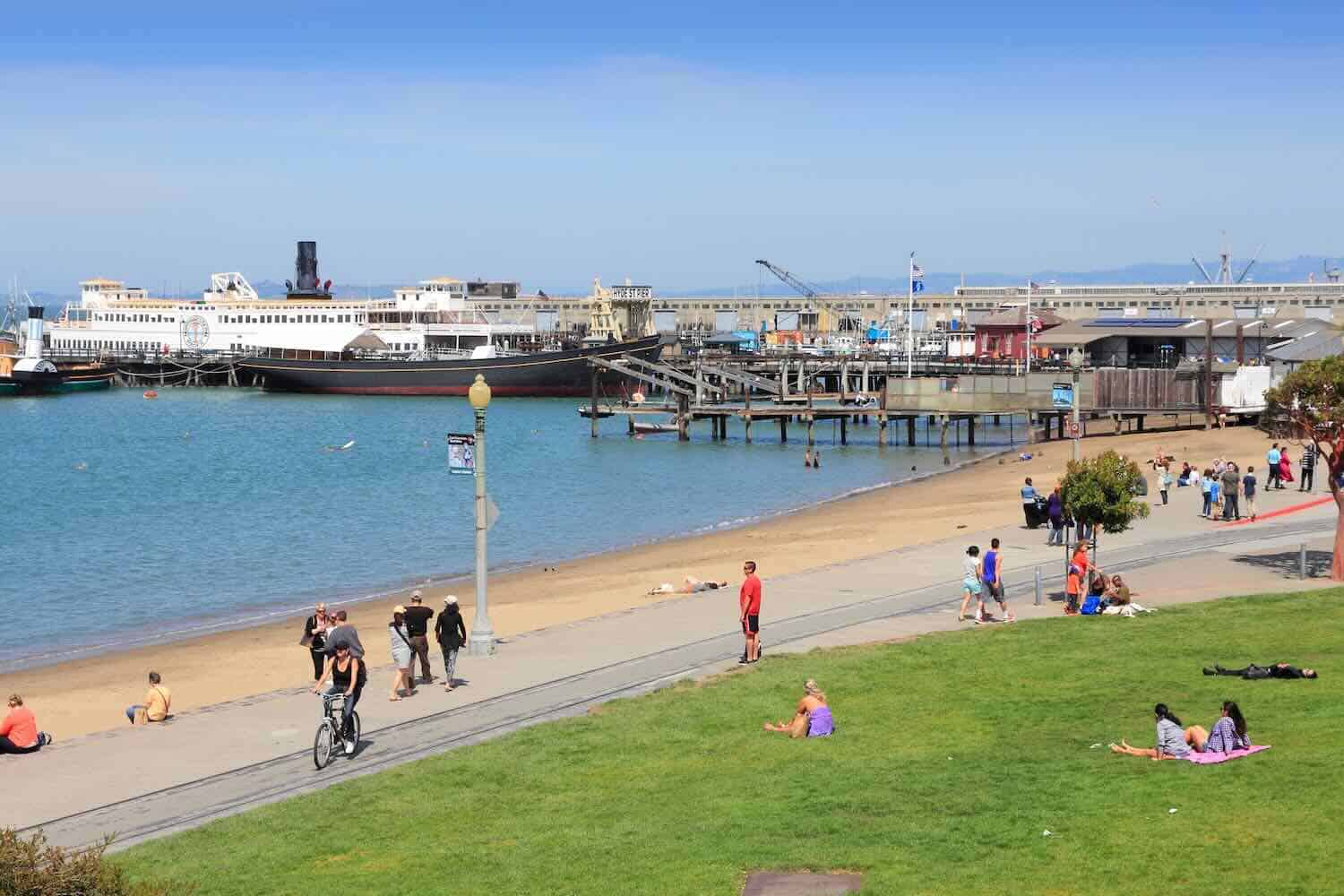
Fisherman’s Wharf is one of the busiest and most recognizable visitor areas in San Francisco. While it can feel more tourist-focused than neighborhoods such as the Mission or North Beach, it remains an important part of a first trip to the city.
The waterfront is packed with things to see, from Pier 39 and its restaurants and shops to historic maritime attractions and views across the bay. It is also closely connected with boat trips and some of San Francisco’s most popular waterfront experiences.
For visitors planning to see Alcatraz Island, Fisherman’s Wharf is particularly relevant because the waterfront is closely associated with Alcatraz boat departures and other bay activities.
Rather than treating Fisherman’s Wharf as the entire San Francisco experience, think of it as one part of a larger itinerary. You can explore the waterfront, visit Pier 39, enjoy the bay views, and then continue toward North Beach, Chinatown, or another nearby neighborhood.
Which San Francisco Neighborhood Should You Explore First?
There is no single neighborhood that is right for every traveler. That is actually one of the best things about San Francisco.
For a first visit, Chinatown, North Beach and Fisherman’s Wharf provide a strong introduction to the city. They combine food, history, waterfront scenery and several famous San Francisco experiences.
If food is a major part of your trip, the Mission District, Chinatown, North Beach and Japantown offer very different culinary experiences. If you are more interested in history and culture, Haight-Ashbury, Castro, Nob Hill and Chinatown give you plenty to explore.
Travelers who want architecture and photography may enjoy North Beach, Nob Hill and the Marina, while visitors looking for street art, independent businesses and a more local atmosphere may prefer the Mission and surrounding neighborhoods.
Give Yourself Time to Explore Beyond the Landmarks
San Francisco’s famous attractions are worth seeing, but the neighborhoods are where the city starts to feel less like a checklist of tourist stops and more like a place you are actually experiencing.
You might begin your morning among the historic streets of Chinatown, have lunch in North Beach, spend the afternoon exploring the Mission’s murals, and finish the day beside the bay. You do not need to cover every neighborhood in one trip. In fact, trying to do so can make the experience feel rushed.
Choose a few areas that match your interests, leave some time to wander, and let the character of each neighborhood shape your day. That is often when San Francisco becomes most memorable.
