
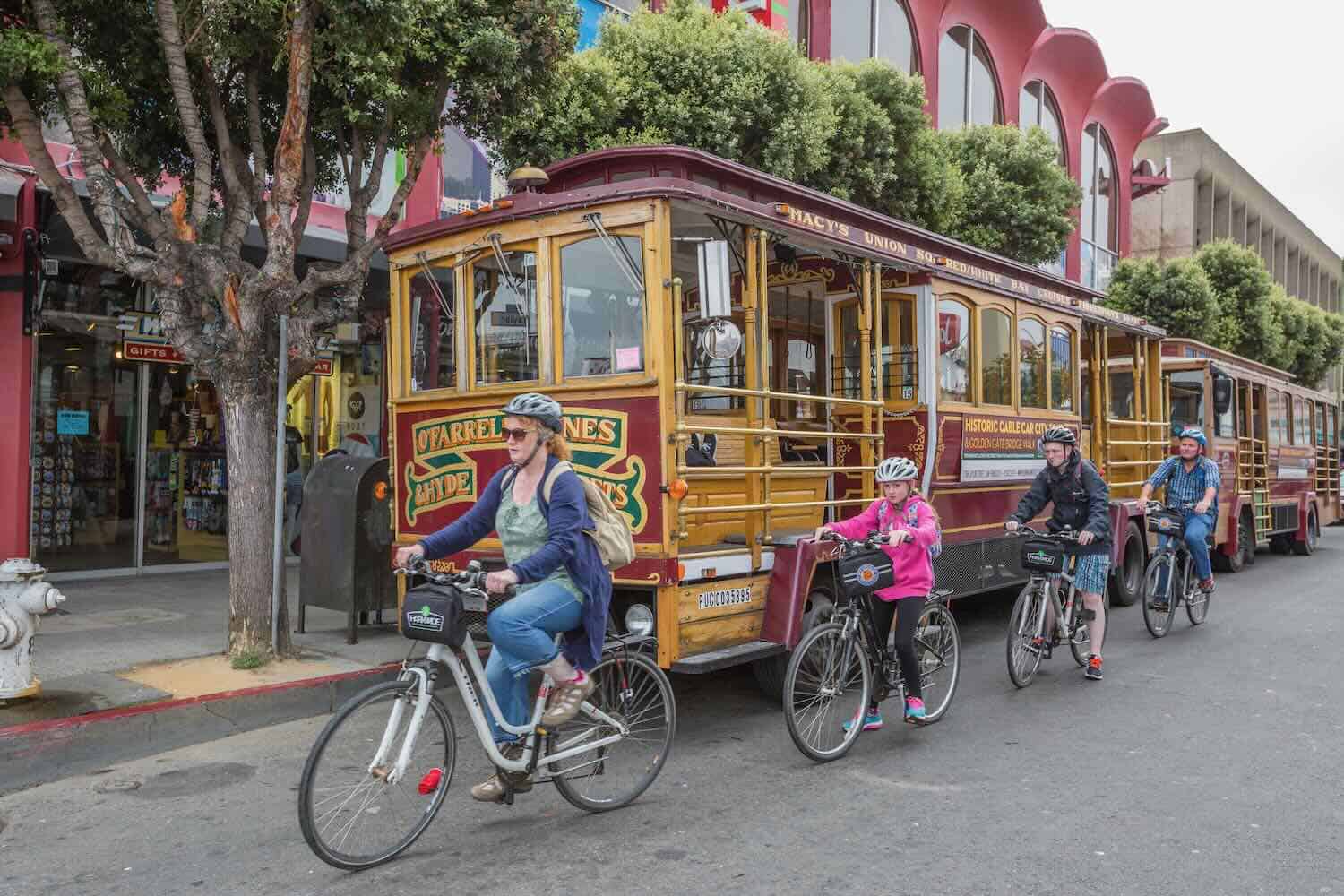
San Francisco is easy to recognize from its famous landmarks, but the city becomes much more interesting once you start exploring its neighborhoods. A few blocks can take you from historic Chinatown to Italian cafés in North Beach, colorful Mission murals, Victorian streets in the Haight, or the lively atmosphere of the Castro.
For visitors, choosing the best San Francisco neighborhoods to explore depends on what you want from your trip. Some are ideal for food, others for history, nightlife, shopping, architecture, or simply walking around and seeing a different side of the city.
Here are some of the neighborhoods worth adding to a San Francisco itinerary.
1. Chinatown: Start With San Francisco’s History and Food
San Francisco’s Chinatown is one of the city’s most recognizable neighborhoods and a natural choice for a first visit. It sits close to North Beach, Nob Hill, and the Financial District, making it easy to combine with other parts of downtown.
Start at Dragon Gate on Grant Avenue, then wander through the narrow streets rather than simply passing through the main tourist areas.
What to see and do in Chinatown
- Walk along Grant Avenue and Stockton Street.
- Explore the shops and traditional markets.
- Visit Portsmouth Square.
- Try dim sum or other Chinese specialties.
- Look for distinctive architecture and street details.
- Combine Chinatown with North Beach and Nob Hill on a walking tour.
Chinatown is especially enjoyable for travelers who like food, culture, photography, and historic neighborhoods. It is also one of the easiest areas to explore on foot.
2. North Beach: Italian Food, Cafés, and Telegraph Hill
Despite its name, North Beach doesn’t have a beach. Instead, this neighborhood is known for its Italian-American character, cafés, restaurants, independent shops, and connections to San Francisco’s Beat-era literary history.
One of the neighborhood’s biggest landmarks is Coit Tower, which sits on Telegraph Hill above the surrounding streets.
Spend some time around Washington Square, walk along Columbus Avenue, and browse the independent businesses around Grant Avenue. City Lights bookstore is another well-known stop for visitors interested in literature and San Francisco’s cultural history.
North Beach is also a good place to plan a meal. Italian restaurants, pizza spots, cafés, and bars make it easy to turn a neighborhood walk into an afternoon or evening outing.
Best for: food lovers, cafés, nightlife, history, photography, and walking tours.
3. Mission District: Murals, Mexican Food, and Local Culture
The Mission District has a completely different personality from the neighborhoods around the waterfront. It is one of the city’s best areas for street art, restaurants, independent shops, and cultural experiences. San Francisco’s tourism organization specifically highlights the neighborhood for its boutiques, restaurants, and public art.
The murals are one of the biggest reasons to visit. Balmy Alley and Clarion Alley are particularly interesting places to explore on foot, with colorful artwork covering walls and buildings.
You can also spend time around Mission Dolores Park, grab food from a local restaurant or taqueria, and simply walk through the surrounding streets.
The Mission works well for travelers who want to experience San Francisco beyond the traditional sightseeing route.
Best for: food, murals, local culture, photography, and relaxed afternoon walks.
4. Haight-Ashbury: San Francisco’s Counterculture Side
Haight-Ashbury is closely associated with the city’s 1960s counterculture and the Summer of Love. The intersection of Haight and Ashbury remains the natural starting point for exploring the neighborhood.
Today, the area mixes its historic identity with vintage clothing stores, independent shops, cafés, restaurants, and colorful storefronts.
You don’t need a full day here. A couple of hours can be enough to walk the main streets, browse the shops, take photographs, and then continue toward nearby Golden Gate Park.
Haight-Ashbury is particularly appealing if you enjoy music history, vintage shopping, unusual stores, and San Francisco’s more bohemian side.
5. Castro: History, Color, and a Lively Atmosphere
The Castro is one of San Francisco’s most recognizable neighborhoods and an important destination for LGBTQ+ history and culture. It is also simply a lively neighborhood to explore, with restaurants, cafés, bars, theaters, and colorful streets.
The area is centered around Castro Street, where visitors can see the neighborhood’s distinctive atmosphere and architecture.
For travelers interested in San Francisco history, the Castro offers something different from the city’s Gold Rush and waterfront stories. It is a place where social history is still visible in the streets and local businesses.
Consider visiting in the afternoon and staying into the evening if you want to experience the neighborhood’s restaurants and nightlife.
Best for: LGBTQ+ history and culture, nightlife, restaurants, and people-watching.
6. Marina District: Bay Views and a More Relaxed Walk
The Marina District is a good option when you want a break from steep streets and dense downtown blocks. The neighborhood is known for bars, boutiques, restaurants, and views around the bay.
One of the easiest ways to explore the area is to combine it with nearby waterfront attractions and the Palace of Fine Arts.
The Marina can also fit naturally into a sightseeing day that includes the Presidio and Golden Gate Bridge. Instead of treating each attraction as a separate stop, you can explore several nearby areas together.
Best for: waterfront walks, dining, shopping, architecture, and combining neighborhoods with major attractions.
7. Nob Hill: Classic San Francisco Architecture and Cable Cars
For a more traditional San Francisco experience, spend some time in Nob Hill. The neighborhood is known for historic architecture, hotels, restaurants, views, and its famous cable car routes.
The Cable Car Museum, Grace Cathedral, and Huntington Park are among the places worth seeing in the area.
Nob Hill is also conveniently positioned near Chinatown, North Beach, and Fisherman’s Wharf, making it practical to include in a walking route covering several neighborhoods.
The hills can be demanding, so comfortable shoes are useful. The effort is often rewarded with city views and some of the classic streetscapes that visitors associate with San Francisco.
Best for: architecture, history, cable cars, views, and a classic San Francisco atmosphere.
8. Union Square: Shopping and a Convenient Starting Point
Union Square is less about discovering a quiet residential neighborhood and more about convenience, shopping, hotels, restaurants, and access to other parts of the city.
It can be a useful starting point for visitors staying downtown because it connects naturally with Chinatown, Nob Hill, the Financial District, and other central attractions. San Francisco Travel also identifies Union Square as one of the city’s major hotel and transit hubs.
If shopping is part of your trip, this is one neighborhood worth including.
Best for: shopping, hotels, first-time visitors, and exploring central San Francisco.
How to Choose Which San Francisco Neighborhoods to Visit
You don’t need to visit every neighborhood during a short trip. Instead, choose areas based on your interests.
For first-time visitors
Try Chinatown, North Beach, Nob Hill, and Union Square. They can be combined into a central sightseeing day and give you a mixture of history, food, architecture, and classic San Francisco scenery.
For food lovers
Put North Beach and the Mission District near the top of your list. Chinatown is another obvious choice if you’re interested in Chinese cuisine and traditional markets.
For history and culture
Explore Chinatown, Haight-Ashbury, and the Castro. Each tells a very different story about the city.
For nightlife
The Mission, Castro, North Beach, and SoMa are strong choices, with different styles of bars, restaurants, clubs, and evening entertainment.
For photography
Try North Beach, Chinatown, Nob Hill, Haight-Ashbury, and the Marina. The combination of colorful streets, hills, architecture, and bay views gives you plenty of variety.
How Long Do You Need to Explore San Francisco’s Neighborhoods?
That depends on how deeply you want to explore.
For a quick introduction, allow two to three hours for one neighborhood. That gives you enough time to walk around, stop for food or coffee, and see a few highlights without rushing.
If you want to combine neighborhoods, choose geographically close areas. For example:
- Chinatown + North Beach + Nob Hill
- Haight-Ashbury + Golden Gate Park
- Mission District + Castro
- Marina + Palace of Fine Arts + Presidio
This approach can save time while giving you a much broader view of the city.
Should You Explore San Francisco Neighborhoods on Your Own or With a Tour?
Both can work.
A self-guided walk gives you the freedom to stop whenever something catches your attention. It is ideal if you enjoy wandering without a fixed schedule.
A guided neighborhood tour can be more useful when you want to understand the history, food, architecture, and stories behind the streets rather than simply seeing them. For example, San Francisco Tours currently features a North Beach foodie walking tour focused on the neighborhood’s food and history.
For visitors with limited time, a guided experience can also make it easier to combine sightseeing with local knowledge.
Tips for Exploring San Francisco Neighborhoods
Keep a few practical points in mind before heading out:
- Wear comfortable shoes. San Francisco’s hills can be surprisingly steep.
- Don’t rush from landmark to landmark. Some of the best neighborhood experiences happen between the major attractions.
- Plan around food stops. Chinatown, North Beach, and the Mission are especially easy to combine with a meal.
- Check the weather before leaving. Conditions can feel very different between neighborhoods.
- Group nearby areas together instead of crossing the city repeatedly.
- Leave room for unexpected stops. A café, bookstore, mural, or small shop can easily become part of the day’s best memory.
Explore More Than the Famous San Francisco Landmarks
The Golden Gate Bridge, Alcatraz Island, Fisherman’s Wharf, and other famous attractions deserve a place on a San Francisco itinerary. But the neighborhoods are where the city starts to feel less like a checklist of attractions and more like a real place.
From the food and history of Chinatown and North Beach to the murals of the Mission and the character of Haight-Ashbury and the Castro, each area offers a different reason to slow down and explore.
If you have time beyond the main tourist attractions, choose two or three San Francisco neighborhoods that match your interests and explore them properly. You may find that those walks become some of the most memorable parts of your trip.
